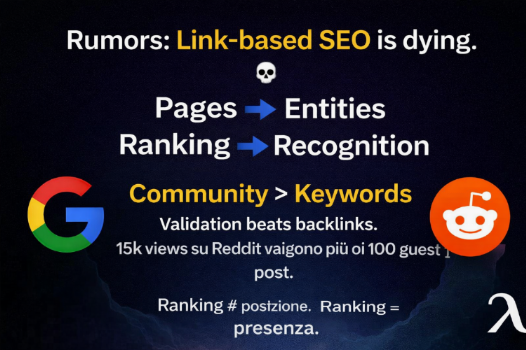
Indexing Is the New Ranking
For years, SEO was measured with a simple question:
Where do we rank?
But in 2026, the more brutal question often comes first:
Are we even indexed?
Because a page that never enters Google’s index doesn’t rank.
It doesn’t compete.
It doesn’t exist.
Zero impressions.
Zero clicks.
Zero visibility.
And the uncomfortable truth is this:
Indexing is no longer guaranteed.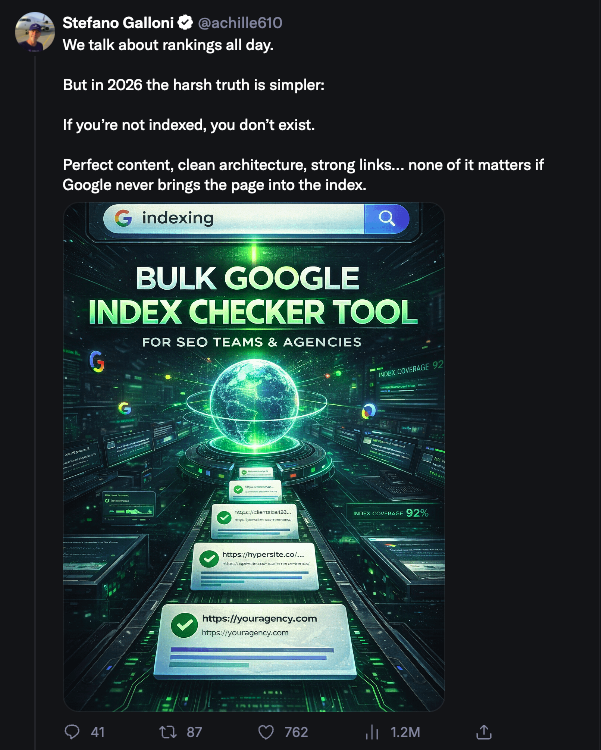
Google’s Index Is Becoming More Selective
Publishing a page used to feel like a contract:
“Google will eventually find it.”
Today, it feels more like an application:
“Google might accept it.”
Between continuous core volatility, AI-driven search layouts, and increasing quality thresholds, Google’s index behaves less like a library…
…and more like a gate.
Pages are now frequently:
-
crawled but not indexed
-
indexed but dropped
-
discovered but ignored
-
canonicalized away
-
delayed for weeks
And often, the reasons are silent.
Why Indexing Status Matters More Than Ever
A missing page is not a small technical issue.
It’s a business failure.
SEO teams can spend weeks optimizing:
-
internal linking
-
structured data
-
content depth
-
authority signals
Only to realize the page never made it into the system.
No indexation means no organic entry point.
In a world where AI assistants synthesize answers from indexed sources, being excluded from Google’s corpus is even more damaging.
Visibility starts at inclusion.
The Real Causes Behind “Not Indexed”
Indexing problems are rarely mysterious.
They are usually structural:
Common blockers include:
-
accidental noindex directives
-
robots.txt restrictions
-
redirect chains
-
canonical conflicts
-
duplicate clusters
-
weak internal discovery
-
crawl budget prioritization
-
thin or low-value page patterns
The problem is that these issues scale quietly.
A single mistake can affect thousands of URLs.
Why Bulk Index Checking Is Becoming Mandatory
This is where bulk Google index checker tools matter.
Not because they are glamorous.
But because they are operational.
SEO today is not just strategy.
It’s monitoring.
Agencies and large teams need to know:
-
Which pages entered the index
-
Which pages were excluded
-
Which pages dropped out
-
Which client sections are silently invisible
At scale, manual spot checks are meaningless.
Indexation must be tracked like uptime.
Indexing Is the First Layer of SEO Infrastructure
Ranking is downstream.
Indexing is upstream.
And in the AI era, the shift is even sharper:
Search is moving from retrieval → synthesis.
If your content is not indexed, it is not part of the answer layer.
SEO is no longer only about “position.”
It is about admission.
Final Thought
A bulk index checker is not a growth hack.
It’s a reality check.
Because in modern search, the most dangerous failure is not ranking #8.
It’s being invisible without knowing it.
Indexing is the new ranking. λ