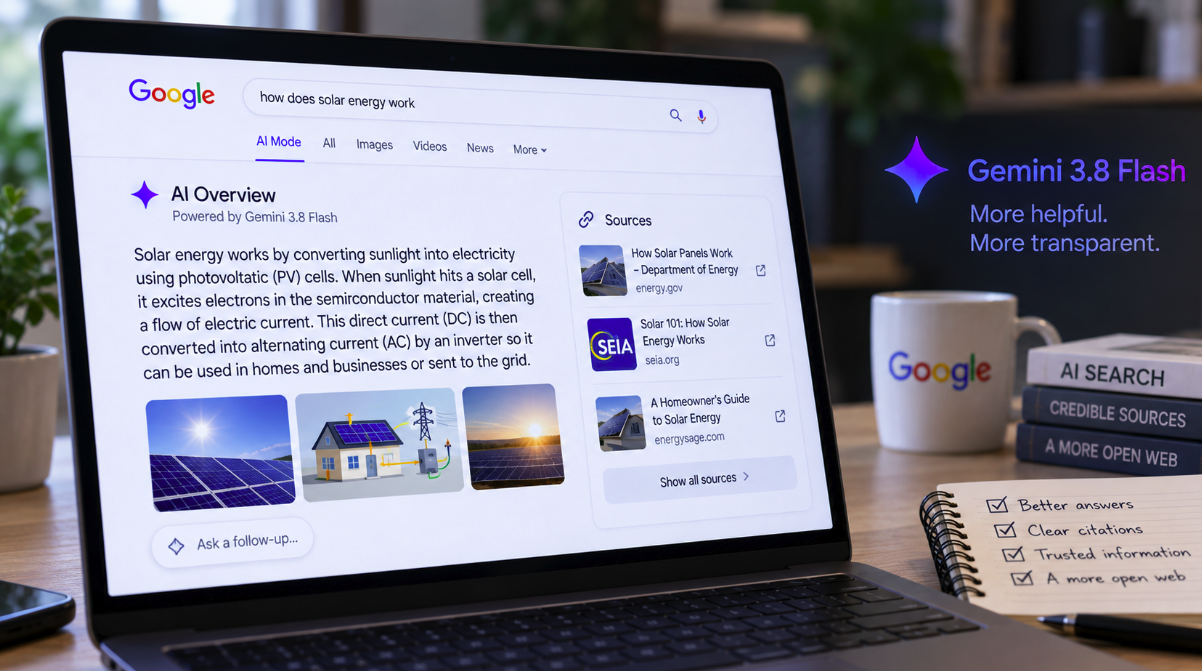
Publishers watching Google AI Mode saw something alarming almost immediately after Gemini 3.8 Flash arrived in Search: generated answers that had previously linked to sources began appearing with few or no visible citations. Within roughly a day of the public escalation, Google acknowledged that the behavior was unintended and the links returned.
NetContentSEO documented the completed sequence on September 4. The important development is not simply that Google repaired a rollout bug. The episode demonstrates a measurement problem that will become increasingly important as publishers monitor AI-search visibility: a site's citations can collapse because the search product changed, even when nothing about the site, its authority or its content changed at all.
That makes generative-search analytics fundamentally different from conventional rank tracking. When a publisher disappears from AI answers, the cause may sit on the publisher's side — but it can also sit inside the model, retrieval stack or interface being tested.
Gemini 3.8 Flash arrived in Search with an attribution problem
Google introduced Gemini 3.8 Flash on September 2 as its newest Flash model for reasoning, coding and agentic tasks. In Google's launch announcement, the company said the model was available to Google AI Pro and Ultra subscribers in AI Mode in Google Search, as well as through the Gemini app and developer products.
Early testing quickly exposed an unexpected difference. Search observers including Gagan Ghotra and Glenn Gabe found that informational AI Mode responses produced with Gemini 3.8 Flash were returning almost no source links, even when comparable queries using the default AI Mode experience displayed citations.
Search Engine Roundtable documented the reports on September 3. At that point, the evidence supported two plausible interpretations. Google might have changed the way the new model attributed information, or the new model integration might simply have been malfunctioning.
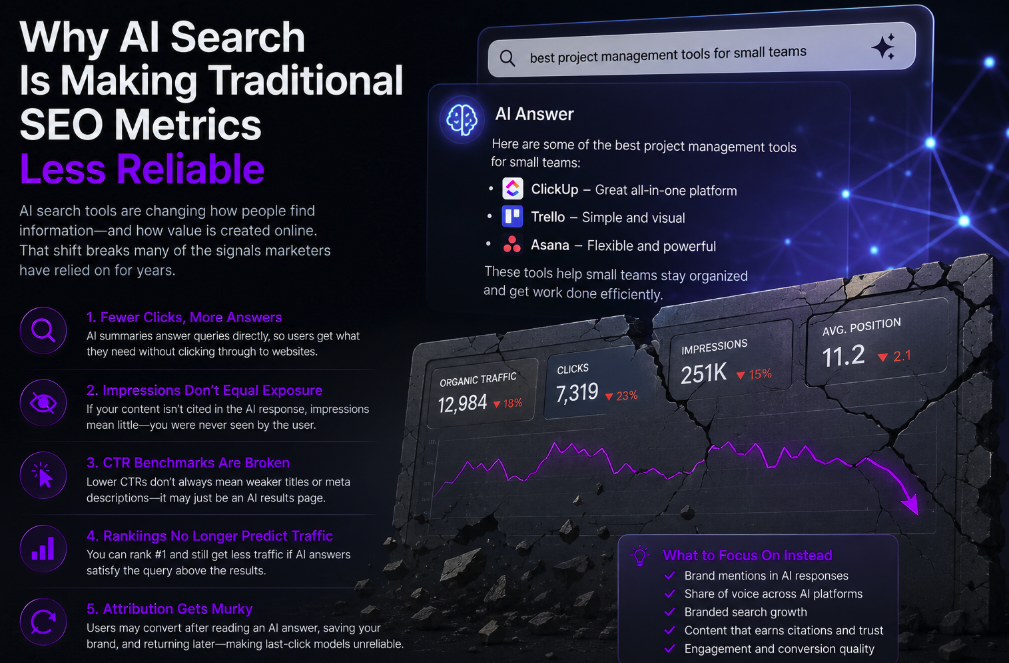
That distinction was economically meaningful for publishers. AI search can already answer a user's question without requiring a visit to the underlying source. If visible citations were intentionally reduced as well, publishers would lose another path through which generated answers can send users back to the open web.
Google's response changed the interpretation
Google Search vice president Robby Stein responded publicly that the citation behavior was not working as intended and that a fix was coming. Search Engine Roundtable subsequently updated its report after fresh tests showed links appearing again in Gemini 3.8 Flash responses.
That makes the final interpretation considerably narrower than the first screenshots suggested. The near-total disappearance of citations was a product defect, not confirmed evidence that Google had decided Gemini 3.8 Flash should systematically stop linking to publishers.
This is an important correction because AI-search observations can turn into strategic narratives very quickly. A handful of reproducible screenshots can appear to reveal a new policy toward publishers. If the underlying behavior is caused by a deployment bug, however, the same screenshots may describe a product state that lasts less than a day.
The appropriate response is not to dismiss early observations. Multiple independent users reproducing an unexpected behavior is valuable evidence and can help expose defects. The lesson is that observation and explanation need to remain separate until the platform responds or the behavior persists long enough to support a stronger conclusion.
A citation can fail while the answer keeps working
The incident also reveals an unusual asymmetry in generative search. In traditional web search, the link is the product. A search result without a destination is barely a result at all. In an AI answer, the generated response can remain useful to the searcher even if attribution fails.
The system can retrieve information, synthesize it and answer the question while the interface neglects to display the sources properly. From the user's perspective, the core experience may still look functional. From the publisher's perspective, visibility has deteriorated dramatically.
That separation makes citations a distinct technical and economic layer. Retrieval determines which sources contribute to an answer. Generation determines how the information is synthesized. Citation and interface logic determine whether users can see and visit those sources. A failure in the final layer can make a publisher appear absent even if its material still influenced the response.
This is why measuring only visible citations cannot tell a publisher everything about retrieval. A missing citation might mean the source was not used, but it can also reflect a problem in attribution or presentation. Without platform-level telemetry, outside observers often cannot distinguish those possibilities directly.
AI visibility monitoring needs model-level metadata
The Gemini incident exposes a weakness in dashboards that treat “Google AI Mode” as one stable channel. AI Mode can expose different models and configurations. Gemini 3.8 Flash was available to certain paid subscribers while other users could receive different experiences. A metric that mixes those sessions together can hide substantial differences.
Serious monitoring therefore needs to record more than whether a domain appeared. The useful observation includes the prompt, timestamp, geography where relevant, account or subscription context, model or mode when visible, citation placement and repeated runs.
That metadata makes diagnosis possible. If citations disappear across many unrelated publishers immediately after a model rollout, a platform-side change becomes more plausible. If one domain falls while peers remain stable, publisher-specific explanations deserve more attention. If results recover without any site changes, that is another clue that the original decline was external.
The same principle applies beyond Google. ChatGPT, Perplexity, Claude and other AI products continually change models, retrieval behavior and interfaces. A brand's apparent share of voice can move because the measurement target itself moved.
One screenshot is evidence, not a baseline
Generative systems introduce another difficulty: stochastic variation. Two runs of the same prompt do not always produce identical wording, sources or recommendations. A single result therefore has limited statistical value even when no software rollout is occurring.
Repeated testing is essential. A publisher that appears in one out of ten runs has a different visibility profile from one that appears in nine out of ten, even if both can produce an impressive screenshot. Measurements should also be repeated across time so temporary product anomalies do not become long-term strategic conclusions.
The Gemini 3.8 Flash timeline makes this problem unusually clear. A result captured on September 3 could accurately show almost no citations. A test on September 4 could show them restored. Both observations can be correct while describing different versions of the product.
Longitudinal AI-search research should therefore preserve timestamps and model transitions as carefully as financial datasets preserve corporate actions. Otherwise a structural break in the product can be mistaken for a change in the publisher being measured.
Restoring citations does not restore the old search economics
Publishers should not interpret Google's repair as resolution of the broader traffic debate. A citation inside a generated answer is not economically equivalent to a traditional organic result.
AI Mode can satisfy much of a user's informational need before a click occurs. Source links can appear inline, inside expandable panels or elsewhere in the interface, and different placements can produce different engagement. The presence of a citation establishes attribution and creates a path to the source, but it does not guarantee that users will follow that path.
This distinction suggests two separate metrics. Citation visibility asks whether the publisher receives attribution inside the answer. Referral value asks whether that attribution produces meaningful visits or downstream outcomes. Google's bug temporarily damaged the first metric. Fixing it says nothing by itself about the second.
For publishers, both matter. Citation visibility helps establish the site as part of the evidence layer behind AI search. Referral traffic determines whether that participation still supports the economic model of producing original information.
Google's fix is still an important signal about the open web
The most consequential part of Google's response may be that it treated the missing links as incorrect behavior. When observers reported that Gemini 3.8 Flash was barely citing sources, Google did not defend the result as an intentional redesign. It said the behavior needed fixing.
That does not establish a minimum citation rate, guarantee traffic or commit Google to preserving today's interface indefinitely. Future changes in source presentation will have to be evaluated on their own evidence. But it does establish that an AI Mode experience broadly stripped of citations was not, in this incident, Google's desired state.
That matters because generative search depends on an information ecosystem it does not produce entirely by itself. Publishers, researchers, companies, governments and communities continuously create the material retrieval systems need to answer current questions. Visible attribution is one of the mechanisms connecting that generated layer back to its sources.
The new SEO diagnostic starts by asking what changed
When traditional organic traffic drops, SEO teams inspect rankings, indexing, technical errors, competitors and algorithm updates. AI visibility adds another diagnostic branch: the model and interface themselves.
A sudden citation decline should trigger questions about whether the provider deployed a new model, changed retrieval behavior, altered citation presentation or acknowledged an incident. Only after separating those possibilities does it make sense to assume the site's content or authority deteriorated.
This can prevent expensive overreaction. A publisher that saw its Gemini 3.8 Flash citations vanish on September 3 could have responded by rewriting pages, changing structured data or altering internal linking. None of those actions would have repaired Google's bug. By the following day, the citations were returning because Google changed its product.
The lesson is not to ignore volatility but to instrument it better. Generative-search optimization needs observability as much as content strategy. Teams should know not only where they appear but under which model, at what time and with what degree of reproducibility.
Gemini 3.8 Flash's missing citations lasted only briefly, but the episode previews a persistent challenge. AI search is becoming a stack of models, retrieval systems and interfaces that can change independently of the websites they surface. In that environment, visibility can disappear overnight without a publisher doing anything wrong. The first task is no longer simply to recover the citation. It is to identify which layer actually lost it.