SEO is acquiring a second audience. Websites still need to work for people and conventional search engines, but they increasingly need to work for AI systems that retrieve pages, compare products, verify claims and sometimes act on a user's behalf. That changes the practical meaning of optimization: before an AI agent can recommend a company, cite an article or evaluate a product, it has to be able to reach the information, extract it and decide that it is reliable enough to use.
NetContentSEO's September 3 analysis, building on a new Semrush guide by Carlos Silva, reduces that problem to three foundations: access, structure and trust. The framework is useful precisely because it is less exotic than much of the terminology surrounding GEO, AEO and AI-search optimization. The emerging agentic web is making old technical disciplines more consequential rather than replacing them with a secret new ranking formula.
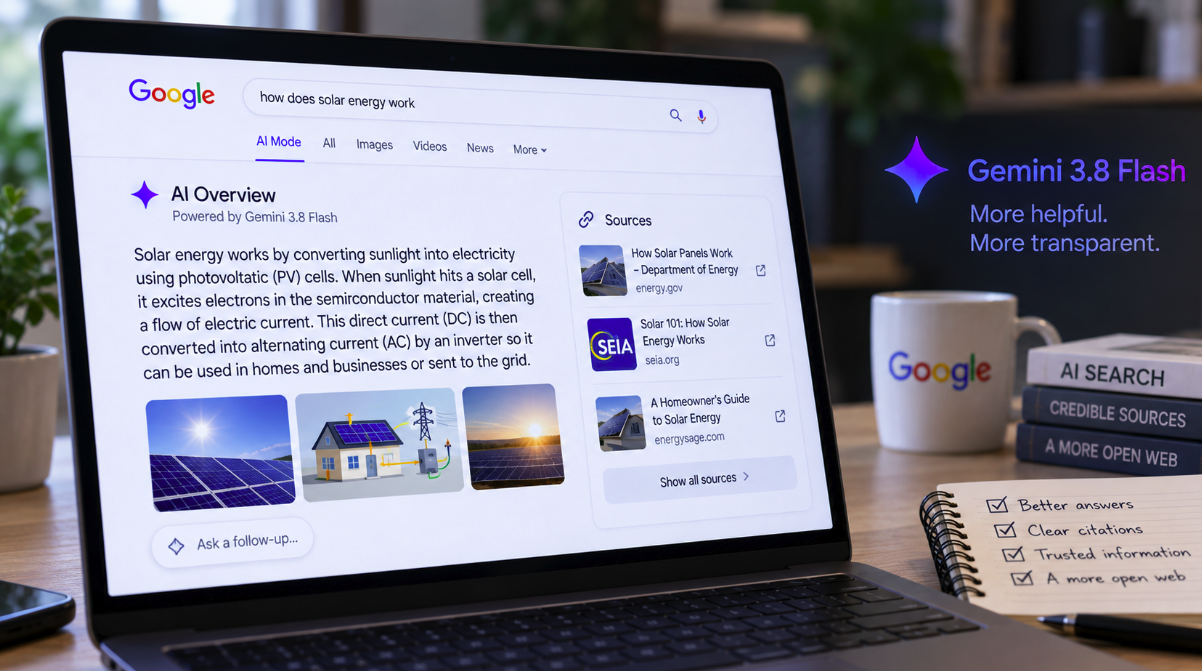
That interpretation is increasingly consistent with the platforms themselves. Google's 2026 guidance for generative AI search says foundational SEO remains relevant to AI Overviews and AI Mode and explicitly discusses browser agents that may inspect rendered pages, the DOM and accessibility trees. OpenAI's publisher documentation separately tells sites that want to appear in ChatGPT search to allow OAI-SearchBot access. The web is not being replaced by agents; it is gaining another class of machine visitor.
Robots.txt is becoming a business-policy file
One of the most important changes is that “AI crawler” is no longer a useful single category. Different automated visitors can have very different purposes. A training crawler may collect material for model development. A retrieval crawler may build an index used to provide current answers and citations. A user-triggered fetcher may visit a page because someone explicitly asked an assistant to read that URL.
Those distinctions turn crawler configuration into a business decision. OpenAI, for example, separates GPTBot from OAI-SearchBot and user-triggered access. A publisher may want to restrict training while still wanting its pages discoverable in ChatGPT search. Blocking every bot associated with an AI provider can unintentionally remove the visibility the company was trying to improve.
This is a different policy problem from the traditional SEO question of whether Googlebot is allowed to crawl. Marketing, legal, editorial and engineering teams increasingly need a shared answer to which machine uses of their content they accept. Robots.txt is therefore becoming an expression not only of indexing preferences but of a company's AI-distribution strategy.
The first competitive advantage is simply being retrievable
Semrush's guide starts with an unglamorous principle: inaccessible information cannot be cited. That sounds obvious, but modern websites routinely make important content dependent on client-side JavaScript, consent layers, complex navigation or application frameworks that assume a full browser environment.
An AI retrieval system may not behave like a human running the latest Chrome. Some crawlers primarily consume the server's initial HTML. User-triggered browser agents may be more capable and inspect visual renderings or accessibility trees. Others can have tighter time and compute budgets. Designing only for one crawler therefore becomes risky.
The safest foundation remains a web page whose essential meaning survives without elaborate execution. Important facts should be present in accessible HTML, headings should describe the content beneath them, links should be discoverable and servers should respond reliably. That is conventional technical SEO, but the failure mode has changed. A broken page no longer merely risks a lower ranking; it can become absent from the evidence an AI uses to construct an answer.
Performance also takes on a different role. Human visitors may tolerate a slow authoritative source when they know it contains the information they need. An automated retrieval process operating across several candidate sources can simply use another page when one repeatedly times out. Speed therefore becomes part of source availability, even when it is not a direct “AI ranking factor.”
Structure matters because agents consume passages, not branding
Once an agent reaches a page, extraction becomes the next problem. Traditional marketing pages often rely on context, visual hierarchy and persuasive progression: a visitor sees a headline, reads supporting copy, encounters testimonials and eventually understands the offer. An AI system may need one specific fact buried in the middle.
That favors sections that can stand on their own. A heading should identify the question or subject, and the opening sentences beneath it should provide a direct answer before adding nuance. Stable terminology helps machines connect facts about the same product or feature without unnecessary inference.
This does not require turning editorial writing into robotic fragments. NetContentSEO correctly notes that extraction-friendly writing can still use natural multi-sentence paragraphs and complex arguments. The objective is semantic clarity. Each section should have a recognizable job, and important statements should identify their subject rather than depending excessively on pronouns or context several paragraphs away.
Site architecture extends the same principle across URLs. Pillar pages, descriptive internal links, XML sitemaps and the elimination of orphan pages help machines see related content as a coherent body rather than isolated documents. Architecture cannot manufacture expertise, but it can make existing expertise easier to discover.
Commerce exposes why machine-readable facts matter
The shift becomes especially visible when an agent is comparing products or vendors. Marketing language such as “industry-leading,” “flexible” or “enterprise-ready” provides little concrete material for a system asked to choose among alternatives. Prices, specifications, limits, availability, compatibility and intended use cases are much easier to compare.
This creates a counterintuitive incentive for commercial websites. Companies have historically hidden some information — especially pricing or limitations — to encourage prospective customers to contact sales. An agent acting as the first-stage buyer may instead interpret that missing information as uncertainty and favor a competitor whose offer is easier to evaluate.
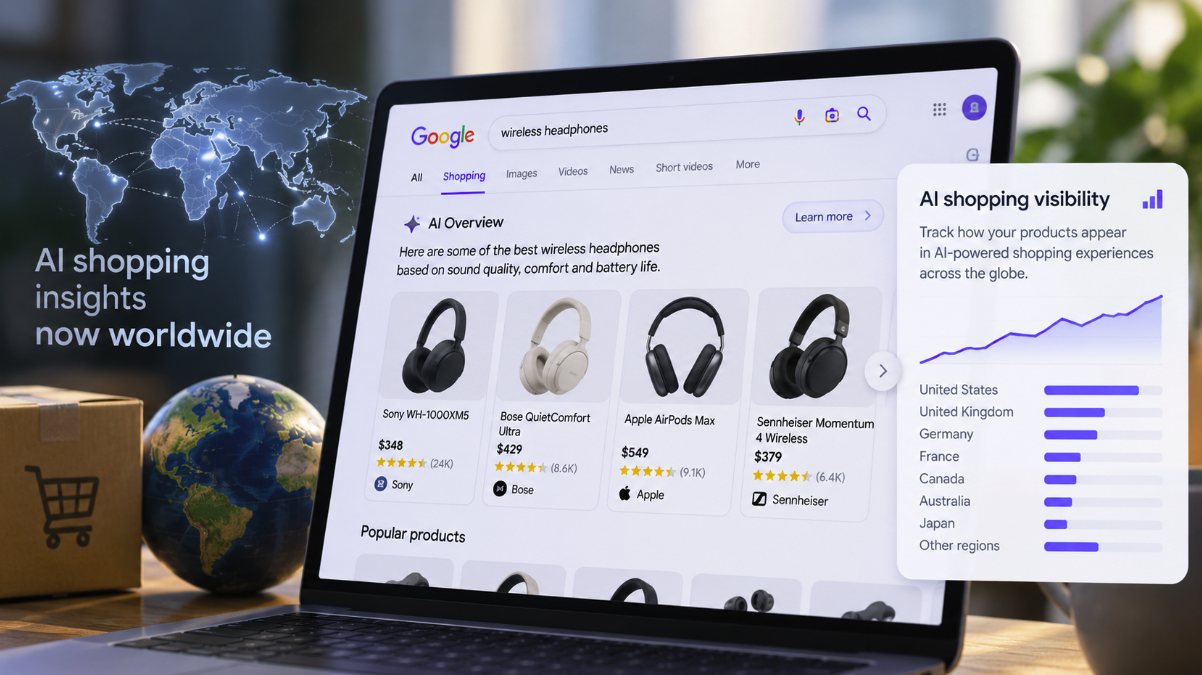
Ecommerce is already moving in this direction. Google continues to expand structured product information and is migrating merchants from the old Content API for Shopping to the Merchant API. The underlying trend is that machine-mediated commerce works better when products are represented as explicit data rather than inferred from promotional copy.
Standard structured data can help describe those facts, but it should not be sold as a magic AI-visibility switch. Semrush recommends established Schema.org types such as Product, Article, Organization and BreadcrumbList. Google likewise says there is no special structured-data vocabulary required to appear in AI Overviews or AI Mode. Evidence that every major AI assistant directly uses JSON-LD as a citation signal remains incomplete.
The sensible approach is therefore conservative: use structured data accurately because it already supports machine understanding and established search features, but do not assume that adding schema guarantees selection by an LLM.
Trust is becoming a cross-site consistency problem
Agents can do something a conventional landing page cannot control: consult other sources before repeating a company's claim. That makes external consistency part of machine usability.
A business can state its opening hours, pricing, location or capabilities perfectly on its own website, but an agent may encounter contradictory information in directories, reviews, documentation or news coverage. Conflicting evidence increases uncertainty. For factual commercial questions, the winning brand may therefore be the one whose information is easiest to corroborate across the web.
Named authors, visible update dates and links to primary evidence operate in the same way. A statistic linked to the original study is easier to verify than an unattributed number copied through several blogs. A product claim supported by technical documentation is stronger than a superlative. A current author biography gives an AI system and a human reader more context about accountability.
This is where AI optimization begins to overlap with editorial governance and digital PR. Backlinks and reputable mentions matter not merely because they can pass conventional search authority but because they create an external evidence graph around an organization. The more independently verifiable the important facts are, the less inference an agent needs to make.
Google is explicitly pushing back on GEO theater
The strongest signal that the market is maturing may be Google's decision to address generative-search optimization directly. In May, Google published a dedicated guide explaining how its generative search features use core Search systems, retrieval-augmented generation and query fan-out to find supporting web pages.
Google's message is unusually clear: traditional SEO foundations still matter, while marketers should be skeptical of supposed AI-only tricks. Its documentation specifically warns against unnecessary AI text files, artificial content chunking and other tactics promoted as special requirements for generative visibility. It also says creating large numbers of pages around fan-out query variations primarily to manipulate AI results can violate spam policies.
At the same time, Google now explicitly tells site owners to explore agentic experiences. Its guidance notes that browser agents may analyze screenshots, inspect DOM structure and interpret accessibility trees, while emerging protocols can allow agents to perform more sophisticated tasks. That is an important distinction. There may be no universal “GEO ranking hack,” but there is clearly a new machine-consumption layer for websites to support.
AI visibility needs a diagnostic funnel
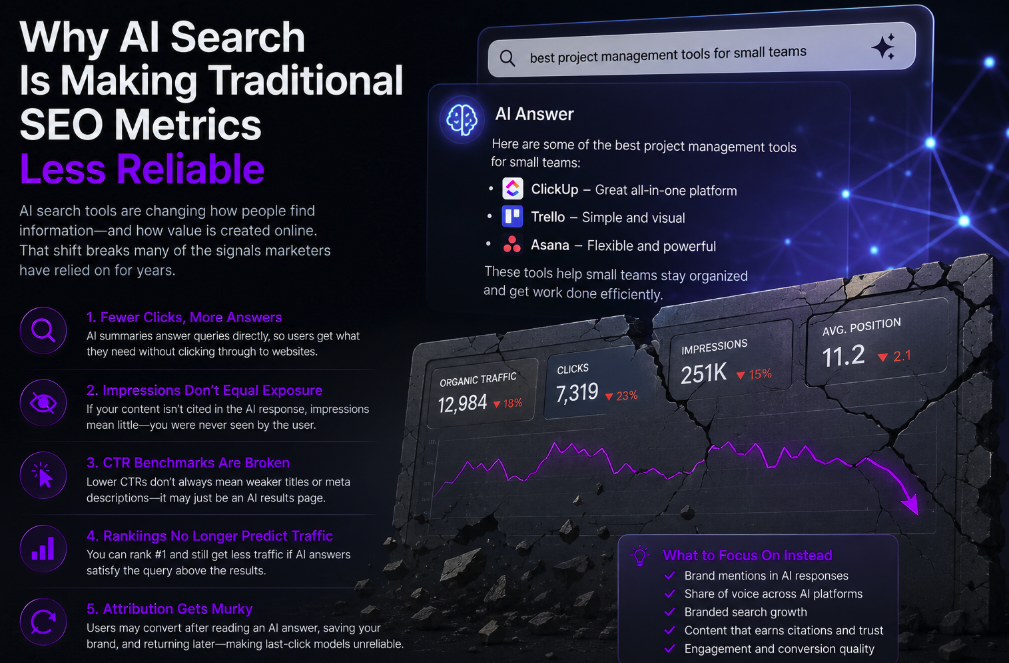
Measurement has to evolve accordingly. Search Console rankings and referral traffic cannot capture every interaction in which an AI system reads a page and uses its information without sending the user to the source. Log files, crawler activity, citation monitoring and prompt testing can therefore provide complementary signals.
The most useful framework is diagnostic rather than vanity-driven. If an AI crawler never reaches the site, investigate access. If it reaches pages but the brand rarely appears, investigate relevance, structure and external evidence. If the brand appears with obsolete information, investigate freshness and conflicting sources. If citations occur but generate little traffic, determine whether the AI interaction is influencing customers upstream rather than expecting every mention to produce a click.
This is also why a single “AI visibility score” can obscure more than it reveals. ChatGPT, Google, Claude and Perplexity do not necessarily retrieve information in identical ways. Their crawlers, indexes, browsing systems and product experiences differ. A site can therefore be highly accessible to one system and effectively invisible to another.
The agent-ready website looks surprisingly like a good website
The emerging lesson is less revolutionary than the terminology suggests. AI agents reward many of the same properties that made websites durable before generative AI: accessible pages, reliable servers, clear information architecture, explicit facts, credible sourcing and consistent information.
What changes is the consequence of those properties. A human once used search results to choose which websites to inspect. Increasingly, an agent may inspect several websites first and present the user with a shortlist, recommendation or completed action. The machine is moving upstream in the decision process.
That means technical SEO is gradually becoming machine usability. Access determines whether an agent can see a business. Structure determines whether it can understand and compare it. Trust determines whether it is willing to repeat what it finds. Companies searching for an exotic optimization trick may discover that the competitive advantage is more basic: make the truth about the business exceptionally easy for machines to retrieve, verify and use.